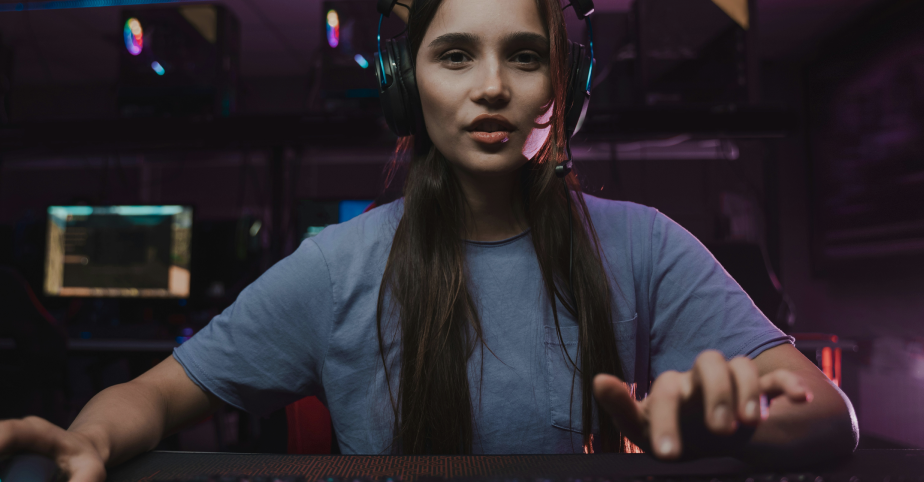
For Gen Alpha, shopping spaces do not begin in shopping centres or on e-commerce sites. Their everyday environment consists of gaming worlds (Roblox, Minecraft, Fortnite), which are becoming not only a source of entertainment but also a place to discover brands and products. The ‘Unlocking Gen Alpha’ report, prepared by the Ebeltoft Group in collaboration with Inquiry, shows that gaming influences young people’s purchasing decisions more than traditional television, making it one of the most important areas of investment for modern retail.
Gaming has a greater influence on shopping than television
One in six parents say that gaming platforms influence their own or their children’s purchasing decisions. This is more than in the case of traditional cable and terrestrial television. In practice, this signifies a shift in media influence – young consumers are discovering brands not through traditional advertising, but through in-game interactions, virtual events or their own avatar creations.
Gaming combines entertainment, communication and shopping in a single environment, which is why brands that aren’t present there simply cease to be visible.
Virtual worlds are shaping a new model for preference formation
Gen Alpha discovers new products mainly through:
- streaming,
- social media,
- brands featured in games,
- high street shops.
In this context, gaming acts as a ‘bridge’ between the digital and physical worlds. Virtual experiences – avatar clothing, virtual events, interactive worlds – create an emotional context that later translates into real-world choices in shops. A child who plays NIKELAND naturally recognises Nike products in the offline world.
Brands don’t sell – brands build communities
The strongest Gen Alpha brands are those that combine commercial content with an experience – Nike, LEGO, Shein. They all have a presence in digital environments, particularly those related to gaming:
- Nike – NIKELAND on Roblox,
- LEGO – collaboration with Fortnite,
- Shein – gamified shopping experiences.
The common thread: the opportunity to interact with the brand through play, rather than through traditional product display. The child doesn’t see an advert. The child experiences the brand.
Why does it work? The attention economy of Gen Alpha
Gen Alpha discovers new ideas and hobbies primarily through digital platforms. 57% of parents say their children draw inspiration from online content.
Gaming is becoming a gateway to trends: fashion, music, gadgets and brands. This is where modern shopping aspirations are born.
In games:
- the children are 'at home',
- decide on the appearance of their avatars,
- experiment with identity and style,
- they immediately check whether they like something.
This experience carries over into real-world decisions. If an avatar is wearing Nike trainers, there is a greater chance that a child will choose them in a shop.
Gaming is a genuine sales channel – albeit not a transactional one
The report suggests that the issue is not that children ‘make purchases’ within games, but rather that games influence their decisions when they actually go shopping. According to the data:
- 59% of Gen Alpha prefer to shop in physical stores,
- and 40% prefer online or click-and-collect.
Gaming is therefore part of the top of the sales funnel. It builds brand awareness and desire, which is then fulfilled later, usually offline.
Strategic implications for the retail sector
A presence in games is becoming a necessity, not an option.
If brands do not exist in the environment where children spend their time, they fade from their consciousness.
Gaming is the ‘new television’.
It is the main channel for aspirational and trend-setting communication.
Product development should take digital experiences into account.
Just as shoes and clothes for avatars have become an integral part of the offering.
Brick-and-mortar shops need to transform themselves into experiential spaces.
Games teach children that every product should have context, interaction and an element of fun.
Collaboration between retailers and gaming platforms will become the norm.
Just as brands once used TV and billboards, today they use Roblox or Fortnite.
Methodological note (summary)
This article is based on data from the report *Unlocking Gen Alpha: Decoding the Next Generation of Global Consumers* (Ebeltoft Group, 2025). The analysis employs a two-pronged research approach, comprising:
1. Desk research – a review of global demographic data, research on digital and consumer behaviour, and trend analyses, with a view to identifying the key characteristics and values of Generation Alpha.
2. Survey – an online survey conducted in September–October 2024 among more than 5,800 parents and carers of children aged 4–14. Respondents came from 15 countries across Europe, North America, Asia and South Africa, enabling cross-continental comparisons.
The questionnaire covered, among other things, children’s hobbies, values, consumer behaviour, shopping channels, children’s influence on purchasing decisions, and their use of technology.
The results reflect parents’ perceptions, providing an up-to-date and comparable picture of Gen Alpha’s global behaviour.